
01 · In the kitchen
Rapid food waste disposal, right where the waste is made
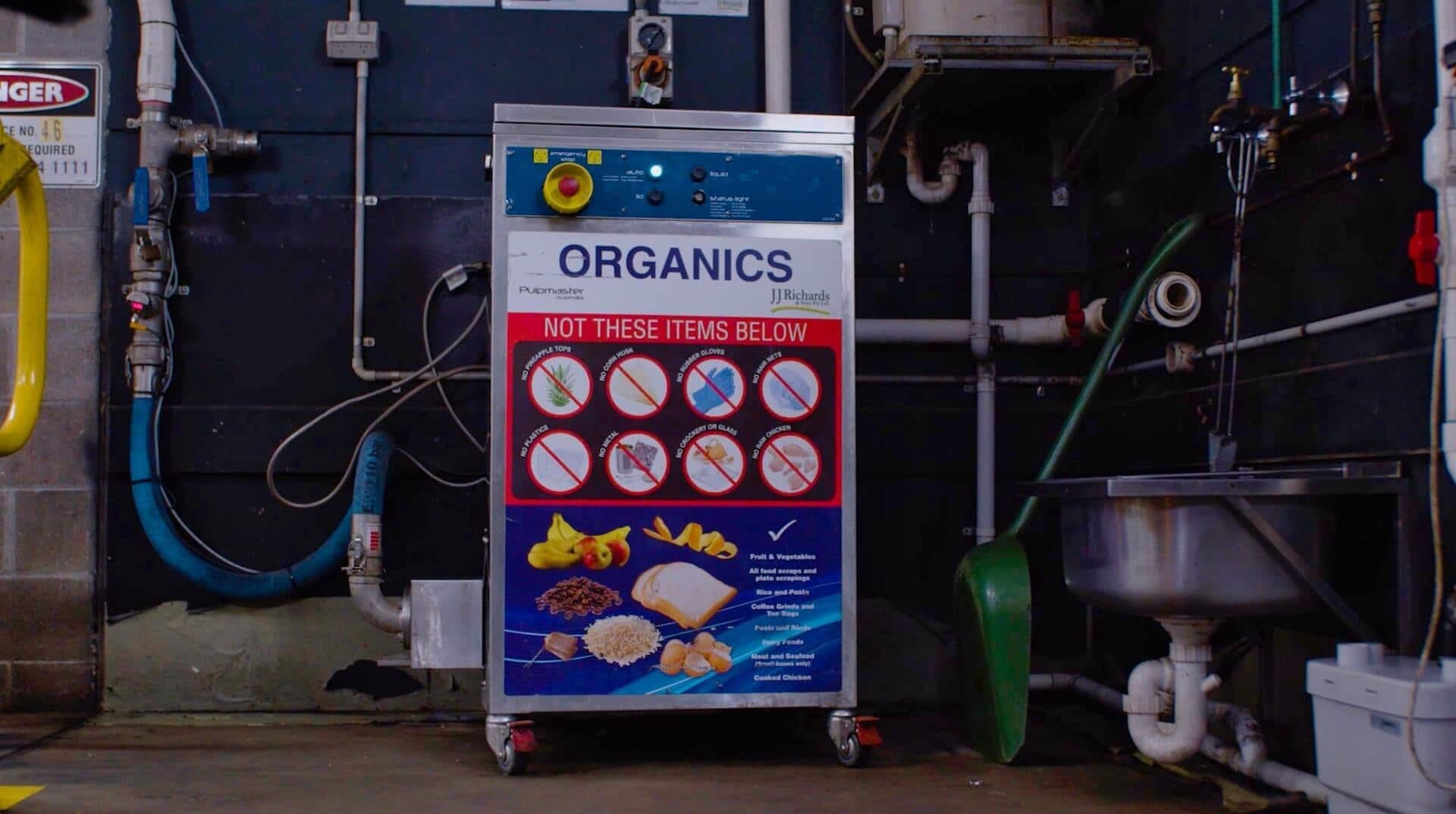
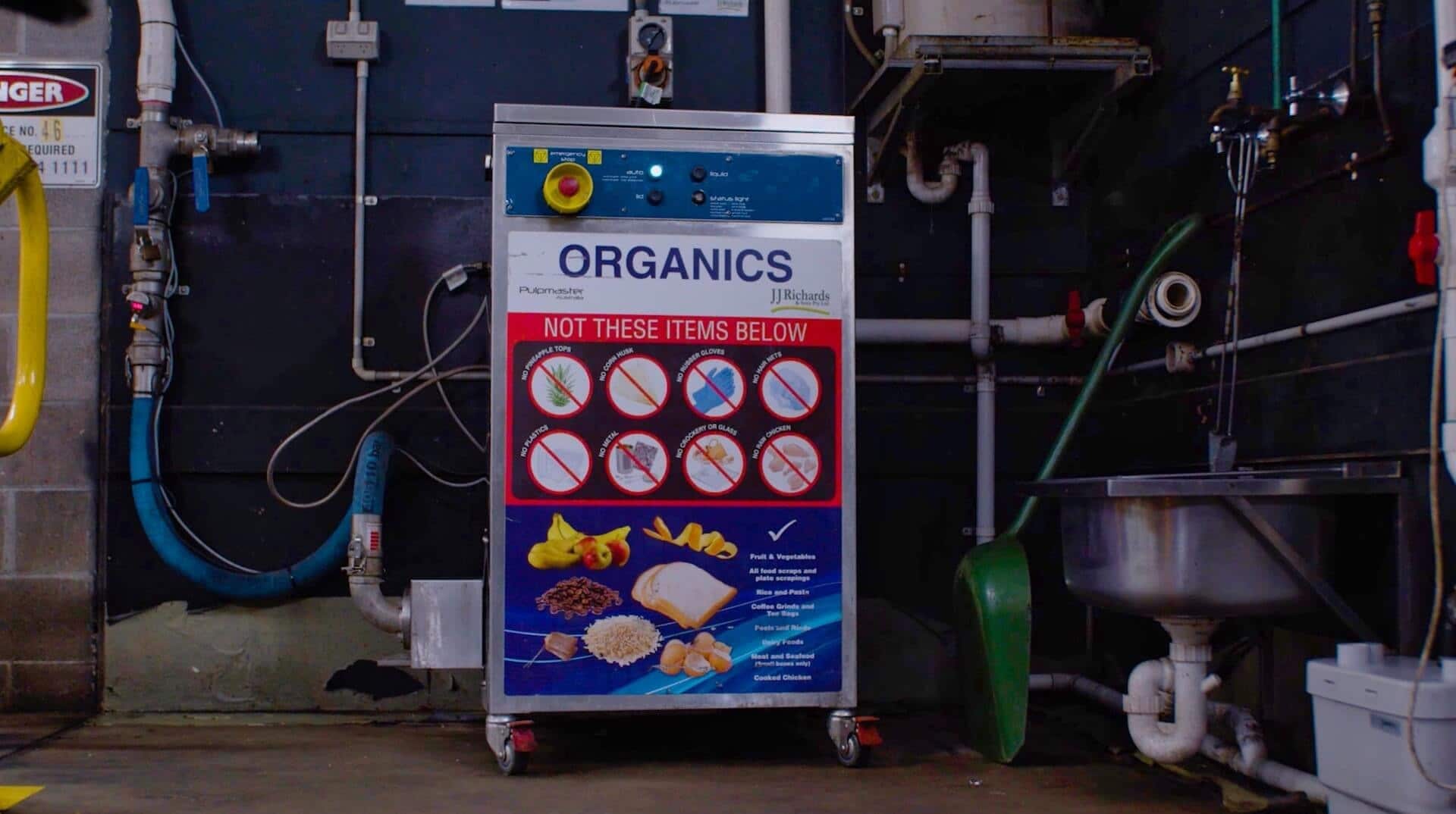
Not much larger than the average washing machine, the Pulpmaster 6100 allows rapid disposal of food waste and integrates easily into any commercial kitchen. Solid and liquid waste goes in together, is macerated into a pulp in about 30 seconds, and is pumped through to a sealed holding tank for collection.
Built for a commercial kitchen
The stainless steel finish wipes clean in an instant, and its compact footprint means it sits close to food preparation areas, removing unsafe manual handling and long trips to outside bins. Electronic load sensing ends the cycle as soon as the last of the waste is processed, so no cycle runs longer than it needs to.
Waste reaches the machine in 23-litre caddies collected at the bench, which are easy to carry and hard to overfill. Our technicians set the water volume to suit your kitchen, and everyone who uses the machine is trained on site.
Specification
Features
Solid and liquid cycle
One machine for both waste streams, including oil and soup.
Stainless steel body
Wipes clean, vermin proof, built for a wet back-of-house.
LCD display
Cycle status, error messages and tank level as a percentage.
Self-cleaning cycle
Easy cleaning cycle with a flexi hose for the drum.
Automatic lid
Closes on Auto Start so the unit is safe while it works.
Fine water mist
Low water volume per cycle, adjustable by our technicians.
Splash guard
Keeps the load contained during the pulping cycle.
Emergency stop
Category 3 safety rating with full dual redundancy.
Fitting the site
The unit and the tank do not have to sit together
The 6100 goes where the waste is generated. The pulp is piped through to a holding tank placed wherever there is room, so a tight kitchen or a busy dock keeps its clear run for deliveries and bin movements. We survey the site first and set the system out around the space you have.
See the layout options →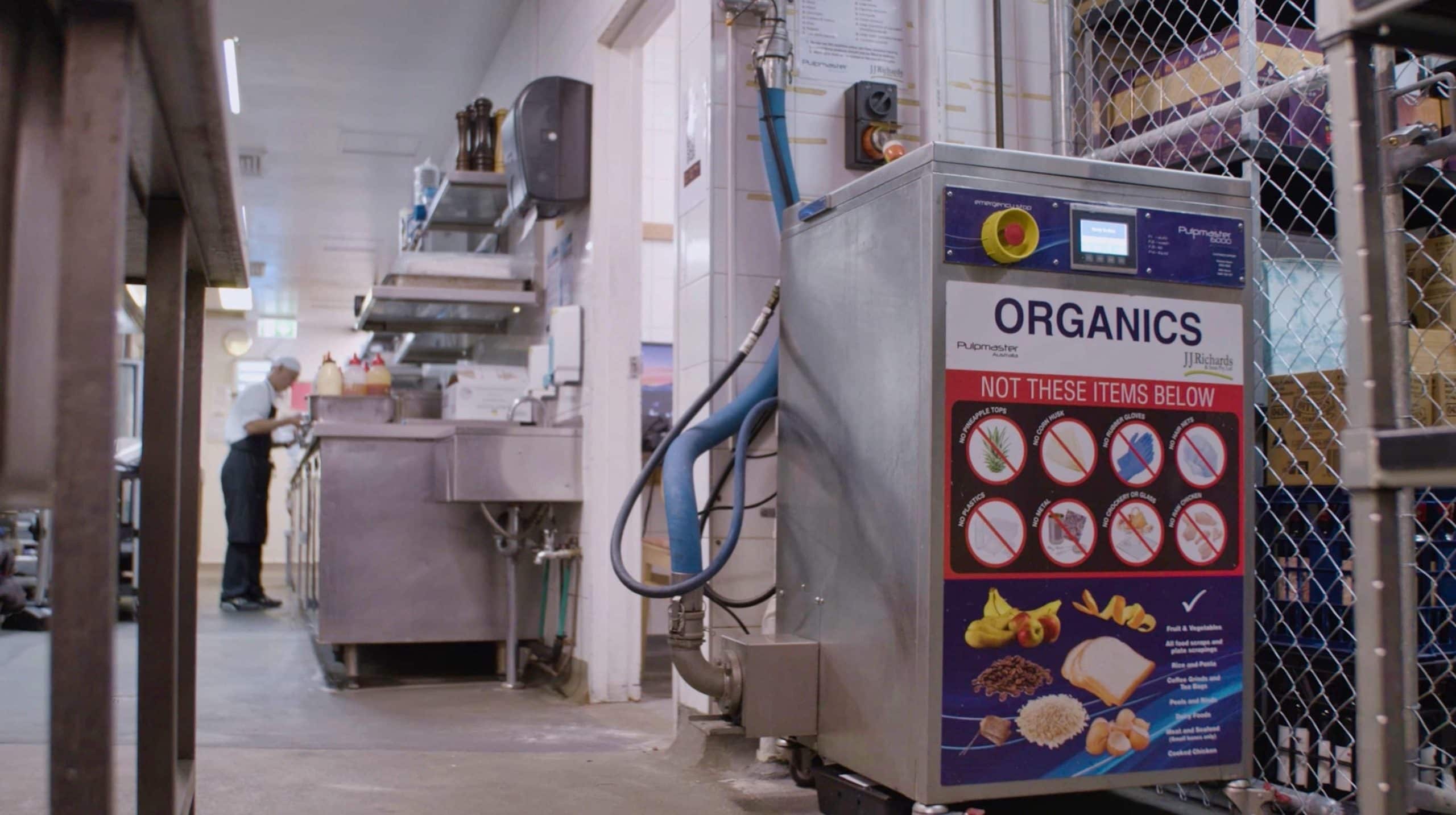
Loading the machine
What goes in, and what stays out
Goes in
All solid and liquid food waste, including cooking oil, dairy, soup and gravy, tea bags and coffee grounds, and small quantities of soft organic paper such as hand napkins. Small bones are processed and are a good source of minerals in the end product, with softer waste loaded below and above them.
Stays out
Oyster and mussel shells, corn husks, lemon grass and pineapple tops. Shells grind into sand that blocks pipes over time, and fibrous husks and tops form masses that can lodge in the machine. Cutlery jams the drum. Large or heavy bones should not be loaded.
Full list on the Benefits & FAQ page, and on the laminated wall guide supplied with every installation.
Compare
Not sure the 6100 is the right fit?
The Hercules handles shared sites where several outlets feed one back-of-house, and the caddy system is part of every installation. Compare all three side by side, or answer four questions and we will recommend a setup.